
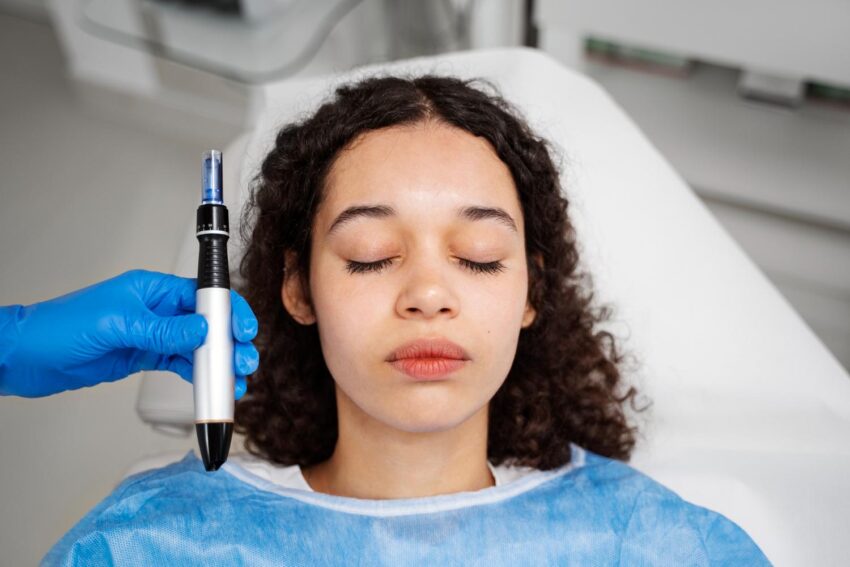
In the world of aesthetic treatments, few procedures have gained as much popularity as microneedling. Also known as collagen induction therapy, it is celebrated for its ability to treat fine lines, acne scars, and overall skin texture. However, for those with diverse skin tones or sensitive conditions, one critical question often arises: Is microneedling safe for all skin types?
Unlike many laser treatments that target pigment and can carry risks for darker skin tones, microneedling is a mechanical process. This fundamental difference makes it one of the most versatile tools in a skincare professional’s arsenal. At Faces by Amie, we prioritize skin safety and education, ensuring that every client understands how this technology interacts with their unique biological profile.
The Science of Microneedling
To understand its safety, one must understand the process. Microneedling involves using a device equipped with fine, medical-grade needles to create thousands of controlled “micro-injuries” in the skin’s surface. These tiny punctures trigger the body’s natural wound-healing response, stimulating the production of collagen and elastin.
Because the treatment does not use heat or light-based energy to achieve results, it does not pose the same risk of “burning” the skin that some lasers do. This is the primary reason why microneedling is widely considered a “color-blind” treatment, making it an excellent option for a broad spectrum of patients.
Microneedling for Different Skin Tones
One of the most significant concerns for individuals with deeper skin tones (Fitzpatrick scales IV-VI) is Post-Inflammatory Hyperpigmentation (PIH). PIH occurs when the skin produces excess melanin in response to injury or inflammation.
Because microneedling keeps the epidermis—the top layer of skin—largely intact and does not involve thermal energy, the risk of triggering PIH is significantly lower compared to aggressive chemical peels or ablative lasers. For patients of color looking to treat acne scarring or hyperpigmentation, microneedling is often the safest and most effective recommendation. When performed by an expert, such as the team at Faces by Amie, the needle depth and speed are customized to ensure the skin is stimulated without being traumatized.
Considerations for Sensitive and Reactive Skin
While microneedling is safe for various pigments, the condition of the skin is just as important as its type.
- Active Acne: Microneedling should never be performed over active, cystic, or inflammatory acne. Doing so can spread bacteria across the face and lead to further breakouts or infection.
- Rosacea: Those with mild rosacea can often benefit from microneedling as it strengthens the dermal layer, but it must be avoided during a flare-up.
- Eczema and Psoriasis: If you have an active rash or a break in the skin barrier, you should postpone the treatment until the skin has completely healed.
Safety Best Practices: Professional vs. At-Home
The safety of microneedling is heavily dependent on the environment in which it is performed. While at-home “derma rollers” are widely available, they carry significant risks that professional treatments do not.
Why Professional Treatment is Safer:
- Needle Precision: Professional devices use vertical needle entry, which creates clean channels. At-home rollers enter and exit at an angle, which can “flick” and tear the skin, causing unnecessary scarring.
- Sterilization: A clinical setting ensures that needles are single-use and the environment is sterile, virtually eliminating the risk of infection.
- Customization: A professional can adjust the needle depth—ranging from 0.5mm to 2.5mm—depending on whether they are treating thin skin around the eyes or thick scar tissue on the cheeks.
Potential Side Effects and Downtime
Even though the treatment is safe, it is still a medical procedure. Most patients will experience “social downtime” for 24 to 48 hours.
- Immediate Post-Care: The skin will look and feel like a mild to moderate sunburn. Redness, tightness, and slight swelling are completely normal.
- The Peeling Phase: Within three to five days, you may notice light flaking. This is the old skin being pushed out by new, healthy cells.
- Sun Protection: After microneedling, your skin is temporarily more vulnerable to UV rays. Wearing a high-quality, broad-spectrum SPF is non-negotiable during the healing phase to prevent sun damage.
Results and Longevity
Microneedling is not a “one-and-done” miracle. Because it relies on your body’s natural ability to produce collagen, results appear gradually. Most people notice an immediate “glow” due to increased blood flow, but the true structural changes—such as the smoothing of fine lines and the filling of acne scars—become most apparent after a series of three to six treatments, spaced four to six weeks apart.
Conclusion
So, is microneedling safe for all skin types? The answer is a resounding yes, provided the skin is healthy and the procedure is performed by a licensed professional. Its mechanical nature allows it to bypass the pigment-related risks of other therapies, offering a path to rejuvenation for almost anyone. By choosing the right provider and following a dedicated aftercare routine, you can harness the power of your body’s own healing response to achieve the clear, firm, and radiant skin you’ve always wanted.